




Notary Public & Document Execution Services
Commissioned Florida Notary Public (#HH 487357) serving Jacksonville and Northeast Florida. Mobile appointments available.
All Tax & Books provides Florida notary services in Jacksonville, including acknowledgments, jurats, signature witnessing, eligible copy certifications, and Apostille and international document authentication coordination. Elton Kasma is a commissioned Florida Notary Public, #HH 487357.
New clients: complete the intake form. Existing clients: use the private upload link already sent to your email.
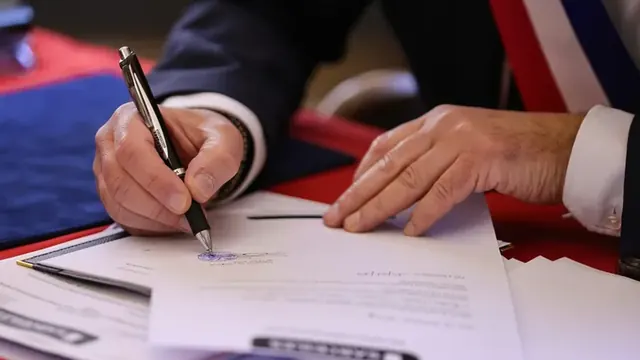
Notary Services
Acknowledgments
Used for deeds, mortgages, powers of attorney, and similar documents. You personally appear before the notary and acknowledge that the signature on the document is yours; the document may already be signed. The notary confirms your identity and voluntary acknowledgment.
Jurats (Oaths/Affirmations)
You swear or affirm that the document contents are true. Used for affidavits, depositions, and sworn statements.
Copy Certifications
Certification that a copy of an original document is true and accurate. Note: Florida notaries cannot certify vital records — those must come from the issuing agency.
Signature Witnessing
Witnessing signatures on documents that require a witness but not necessarily a notary seal.
Common Use Cases
- Real estate — Deeds, mortgages, title documents. See real estate closings.
- Powers of attorney — Under Florida Statutes §709.2105, the principal generally signs in the presence of two subscribing witnesses, who also sign, and acknowledges the document before a Notary Public or another officer authorized by §695.03. Powers of attorney executed in another U.S. state may be valid under separate rules (§709.2106).
- Affidavits — General affidavits and name affidavits when notarization is required. Form I-864 is signed under penalty of perjury and does not normally require notarization.
- Immigration documents — See immigration form preparation
- Apostille / international use — Requirements depend on the document and destination country; not every document should be notarized first.
- Vehicle titles & bills of sale
- Business documents — Operating agreements, resolutions, contracts
What to Know Before Your Appointment
- Bring qualifying identification — current or issued within the preceding five years; the statutory ID requirements apply
- For jurats / sworn statements: do NOT sign before arriving — you must sign in front of the notary as part of the oath
- For acknowledgments: the document may already be signed, but you still must personally appear
- All signers must be present
- Know what you are signing — the notary does not provide legal advice
Accepted Identification
Under Florida Statutes §117.05(5), qualifying identification must be current or issued within the preceding five years and bear a serial or other identifying number. Examples include qualifying driver licenses or state ID cards, a U.S. passport, and U.S. military ID. A foreign passport must also carry the USCIS stamp required by the statute. Other statutory ID categories, personal knowledge, or qualifying credible witnesses may apply. Contact us before your appointment to confirm identification arrangements.
What a Notary Cannot Do
A Florida notary cannot provide legal advice, explain the contents or legal effect of a document, recommend whether you should sign, certify vital records (birth, death, marriage certificates — those must come from the issuing agency), or notarize a document if a signer is not present, not identified, or appears to be signing under duress. If you need help understanding your document, consult a licensed attorney before the notary appointment.
Frequently Asked Questions
Can you notarize a document that is already signed? It depends on the notarial act.
For an acknowledgment — the most common act, used on deeds, mortgages, and powers of attorney — the document may already be signed, but you must still personally appear before the notary and acknowledge that the signature on the document is yours.
For a jurat or sworn statement (such as an affidavit), you must sign in the physical presence of the notary, because the act of signing is itself part of the oath or affirmation.
The document itself, its preparer, or the receiving agency or attorney determines whether an acknowledgment, jurat, or other notarial act is required. We can describe the published differences between notarial acts, but we cannot select the required act for you.
Can you notarize a foreign-language document? Yes, as long as the notary can communicate with the signer and verify their identity. The notary does not certify the content of the document — only the identity of the signer and that the signature was made voluntarily. We communicate with signers in English, Albanian, Spanish, and Italian. If the document also needs a certified translation, we handle that separately.
Do I need an appointment? Yes, all notary services are by appointment. This ensures we are available, have adequate time for your documents, and arrive prepared for the specific notarial acts you need.
Do you handle apostilles? Yes. We coordinate Apostille requests for eligible Florida documents. An Apostille is used when a public document will be presented in another Contracting Party to the HCCH 1961 Apostille Convention; it authenticates the origin of the public document, not its contents. The Florida Secretary of State is the Competent Authority for eligible Florida documents. Requirements depend on the document type: some privately signed documents need proper Florida notarization first, while vital records, court records, and other public documents generally require an original certified copy from the issuing authority. If the destination is outside the Convention, a different authentication or legalization process may apply.
Apostille & International Document Authentication
An Apostille is a certificate issued under the HCCH 1961 Apostille Convention for a public document that will be used in another Contracting Party. It does not certify the document’s contents. It certifies the origin of the public document—such as the authenticity of the signature, the capacity in which the signer acted, and, where applicable, the identity of the seal or stamp.
For eligible Florida public documents and documents properly notarized in Florida, the Florida Secretary of State, Division of Corporations, is the Competent Authority that issues the Apostille. Vital records, court records, and other public documents generally require an original certified copy from the proper issuing authority; a privately signed document may need proper Florida notarization first. Federal documents are handled through the U.S. Department of State, and documents issued or notarized in another state must be submitted to the appropriate authority for that state.
If the destination country is not a Contracting Party to the HCCH 1961 Apostille Convention, an Apostille is not the correct certificate. The document may instead require state authentication or Notarial Certification and additional embassy or consular legalization, depending on the destination country’s requirements.
We coordinate eligible Florida requests from document review and any required notarization through submission to the Florida Department of State and return shipping. If a certified translation is also needed, we coordinate it separately; the receiving authority’s requirements determine whether the source document, the translation certification, or both need authentication.
Mobile Notary Available
We come to you throughout Duval, St. Johns, Clay, and Nassau Counties. Learn more about mobile notary service →
Wedding Officiant
As a Florida notary, we are authorized to solemnize marriages. Learn more about wedding services →